

Choosing the right technology is often one of the first decisions to make when starting a website development project. WordPress offers a relatively practical approach backed by a broad ecosystem, while a custom website provides greater freedom to tailor its structure and functionality to specific requirements.
This difference makes the choice between a custom website vs WordPress an important consideration for companies planning a new website or looking to rebuild an existing one. There is no single approach that works best for every business. The right choice should be based on the website’s purpose, required features, budget, content management capabilities, and plans for future development.
Custom Websites and WordPress Take Different Approaches
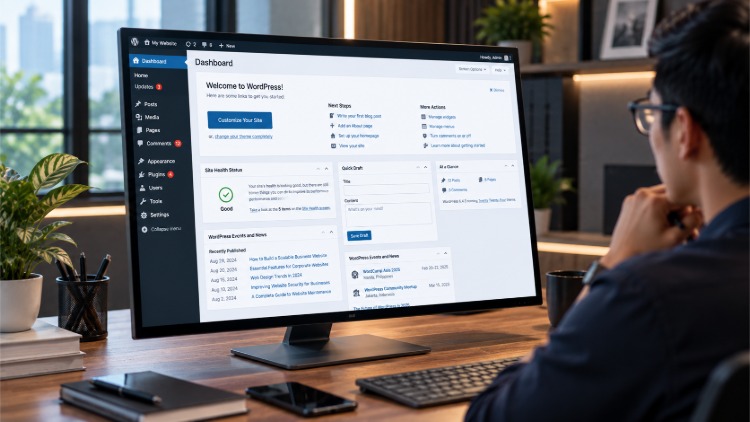
At its core, WordPress is a content management system (CMS) that allows companies to manage website content through an established platform. Its ecosystem includes a wide range of themes and plugins that can be used to add specific functionality.
A custom website, on the other hand, is developed with a structure and functionality designed around the requirements of a particular project. This approach gives developers greater control over how the website’s system, interface, integrations, and features are built.
This does not mean that custom websites are always better or that WordPress is always cheaper and easier. Each approach has its own characteristics and can be more suitable depending on the situation.
What Is a Custom Website?
A custom website is developed by tailoring its structure, design, and functionality to meet specific business requirements. The process can begin with planning the overall structure and continue through the implementation of features that are genuinely needed.
This approach provides more flexibility when a website’s requirements cannot be effectively addressed through a standard structure. For example, a company may need a specific workflow, integration with an internal system, specialized functionality, or a highly tailored user experience.
Another advantage is that the website structure can be designed from the ground up based on the project’s requirements. Developers do not have to force the business to work within the limitations of an existing template or plugin.
However, this level of flexibility typically requires more extensive planning and development. The more complex the website requirements are, the more factors need to be considered, from system architecture to ongoing maintenance after launch.
What Is WordPress?
WordPress is a CMS that allows companies to build and manage websites using an established platform. Users can select themes, manage content, and add functionality through plugins.
One of WordPress’s main advantages is its extensive ecosystem. Many website requirements can be addressed by combining built-in functionality, themes, and plugins without having to develop everything from scratch.
This approach can work well for businesses that need a website with a relatively standard structure and want a practical way to manage their content.
However, WordPress still requires proper planning. As more themes, plugins, or custom functionality are added, it becomes increasingly important to ensure that all components work together properly and remain manageable over time.
What Is the Difference Between a Custom Website and WordPress?
The differences between the two approaches can be evaluated across several aspects that directly relate to business requirements.
| Aspect | Custom Website | WordPress |
| Flexibility | High, with the structure designed around specific requirements | Depends on the capabilities of the CMS, theme, plugins, and customizations |
| Development | Built according to the project’s specific requirements | Makes use of an existing platform |
| Custom features | Greater freedom to develop specialized functionality | Can be achieved through plugins or custom development |
| Development time | Can take longer depending on complexity | Can be faster for standard requirements |
| Content management | Can be designed according to specific needs | Built-in CMS is already available |
| Integration | Can be designed around the required systems | Depends on integration requirements and available solutions |
| Scalability | Can be designed for specific future development needs | Can be expanded, but the existing structure and components need to be considered |
| Maintenance | Depends on the architecture and technology used | Requires attention to CMS, theme, plugin, and related component updates |
The table above shows that the main difference is not simply the technology itself, but the level of control and the way the website is developed.
How Should You Choose Based on Your Business Needs?
The technology should be selected after the website requirements have been clearly defined. Companies need to understand what functions are required, who will use the website, how content will be managed, and whether the website needs to connect with other systems.
For a corporate website with a relatively standard information structure, WordPress can be a practical option. On the other hand, companies that require specialized functionality or more complex integrations may benefit from the greater flexibility offered by a custom approach.
The discussion of website redesign is also relevant for companies that already have a website but find that its existing structure is starting to limit new requirements. Evaluating the current website can help determine whether improvements are sufficient or whether a complete redevelopment is needed.
Flexibility Is a Key Difference
When website requirements are still relatively simple, the difference between a custom website and WordPress may not be particularly noticeable. Both can be used to build corporate websites with pages such as company profiles, services, portfolios, and contact information.
The difference becomes more apparent as requirements grow. A custom website gives developers greater control over how features and workflows are designed. WordPress comes with an established structure, allowing many common requirements to be developed more quickly, although certain customizations still need to take the platform and its components into account.
For businesses, this flexibility should be evaluated based on actual requirements. There is little value in building a highly complex system when the website only needs basic functionality. Likewise, forcing specialized requirements into a structure that was not designed for them can make the website increasingly difficult to manage.
What About Development Costs?
Cost is often one of the main considerations when comparing custom websites vs WordPress. However, making a decision based solely on the initial price can provide an incomplete picture.
A custom website generally involves more specific planning and development. Requirements related to design, features, integrations, and system architecture can make the overall project scope more extensive.
WordPress can be more cost-efficient for certain requirements because the CMS, themes, and many plugins are already available. However, costs can still increase when a website requires extensive customization, premium plugins, integrations, optimization, or other technical work.
Beyond the initial development cost, companies should also consider the costs of managing and developing the website after launch. Factors such as features, number of pages, integrations, level of customization, and technical requirements can all influence the overall project cost. A more detailed discussion of these factors can be found in the article Factors That Affect the Cost of Building a Corporate Website.
Maintenance Should Not Be Overlooked
Both custom websites and WordPress websites require ongoing maintenance. The main difference lies in which components need to be managed and how the system itself is structured.
For WordPress websites, maintenance may include updating the CMS, themes, and plugins, as well as performing backups, security checks, and compatibility testing between components. Using a large number of plugins also requires careful management to prevent conflicts and other website issues.
Custom websites have maintenance requirements based on the technology and architecture used. System updates, bug fixes, security measures, server management, and new feature development may require technical support from developers.
For this reason, maintenance should be considered from the beginning of the project. A website is not an asset that is simply finished once it is published; it needs to be maintained so it can continue to function properly and evolve with the business.
What About Scalability?
Scalability refers to a website’s ability to accommodate changing requirements without making the system increasingly difficult to manage.
With a custom website, the architecture can be designed around known requirements and future development plans from the beginning. This can be especially beneficial for companies that already anticipate the need for integrations, specific workflows, or specialized features that may expand over time.
WordPress can also support larger and more complex websites. However, the structure of the theme, plugins, database, and custom functionality needs to be carefully managed to prevent the website from becoming unnecessarily complicated as it grows.
Therefore, the more relevant question is not whether one approach can scale, but how the website is expected to evolve over the next few years.
When Is WordPress the Right Choice?
WordPress can be a practical choice for companies that need a website with relatively common requirements and want to use an established CMS.
Some examples include:
- Company profile websites.
- Business websites.
- Blogs or content-focused websites.
- Landing pages.
- Websites with relatively straightforward information structures.
- Websites that require practical content management.
In these situations, using a mature platform can help companies avoid developing functionality that is already readily available.
WordPress can also be extended with custom functionality as new requirements arise. However, the more modifications are introduced, the more important it becomes to ensure that the website remains well-structured and easy to maintain.
When Is a Custom Website a Better Choice?
A custom website is worth considering when a company’s requirements demand greater control and flexibility than a standard website structure can provide.
Some situations that may justify a custom approach include:
- Specialized features are required.
- Integration with other systems is necessary.
- The business has specific workflows.
- Custom data structures are needed.
- A highly specific user experience is required.
- The company has long-term plans for feature development.
- The requirements are difficult to address effectively through standard themes and plugins.
In these situations, custom development provides more freedom to build the website around the company’s actual requirements from the beginning.
However, custom websites also require more thorough planning. The more specialized the system requirements are, the more important it becomes to carry out requirement gathering, architecture planning, development, testing, and maintenance in a structured manner.
Don’t Choose the Technology Before Defining Your Needs
A common mistake is choosing a platform first and then trying to adapt business requirements to the technology that has already been selected.
A better approach is to first define the website’s goals, information structure, features, integrations, target users, and future development plans. Once these requirements are clear, the most suitable technology can then be evaluated.
This approach prevents WordPress from being chosen simply because it is practical and prevents custom development from being selected merely because it seems more sophisticated. Both options should be evaluated based on the value they provide for the company’s actual requirements.
The choice of technology should also take into account who will be responsible for managing the website after launch. A website with complex functionality requires a different level of technical support from a corporate website that only needs periodic content updates.
Choosing the Right Approach for Your Business
Ultimately, the comparison between a custom website vs WordPress is not about deciding which one is the absolute winner. WordPress can be an effective solution for certain requirements, while a custom website can provide the flexibility needed when a company’s requirements are more specific.
When a website has relatively standard requirements, a clear content structure, and a need for practical content management, WordPress can be a sensible choice. When the project involves specialized features, integrations, specific workflows, or more complex long-term development plans, a custom website may be worth considering.
The most important thing is to make the decision based on clearly understood requirements. This ensures that technology serves as a tool for achieving business objectives rather than becoming the objective itself.
Bali Gatra provides Website Development services to help companies build websites based on their requirements, structure, features, and future development plans.
If you are deciding between a custom website and WordPress for your company’s project, consult with us about your website requirements so we can discuss the most suitable development approach based on the specific needs of your project.