


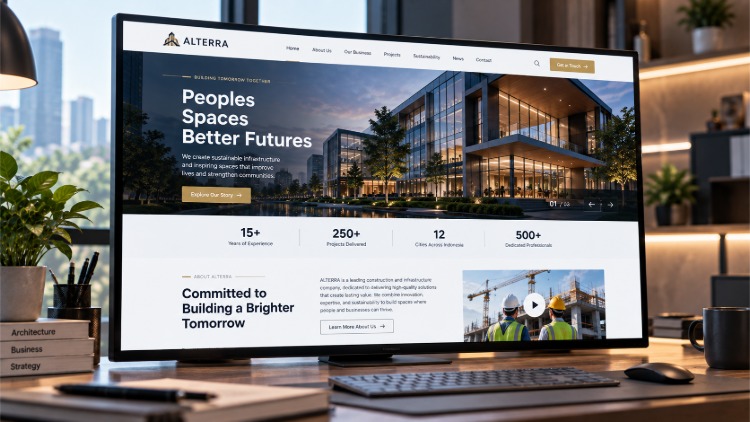
A company’s website is often one of the first places potential customers turn to when they want to learn more about a business. Before getting in touch, they may look for information about the company’s background, services, experience, and contact details through its website. A company profile website is therefore more than a collection of company information—it can become part of the business process by helping build credibility and giving potential customers a clearer understanding of what the company offers.
A website also gives a company a direct space to communicate its identity and areas of expertise. For businesses looking for broader digital solutions, software house and website development in Bali can also serve as a partner in developing websites and digital solutions tailored to specific business needs.
What Is a Company Profile Website?
A company profile website is a website designed to introduce a company and provide a more comprehensive overview of its business through a digital platform. It may contain information about the company’s background, products or services, experience, portfolio, contact details, and other information that helps visitors understand the business.
Unlike websites designed primarily for transactions or web-based applications, a company profile website generally serves as the company’s digital representation online. Visitors can use it to learn who the company is, what it does, and whether its capabilities align with what they are looking for.
The structure of a company profile website can also vary depending on the company’s objectives. A service-based business, for example, may need more space to explain its services and portfolio. A company offering a wide range of products may require a broader information structure to present each product clearly.
In practice, a company profile website can serve as part of a company’s overall digital strategy while also becoming an initial reference point for potential customers before they decide to make contact.
What Is the Function of a Company Profile Website for a Business?
The role of a company profile website goes beyond simply providing information. When structured effectively, it can support potential customers at several stages of their journey toward making contact with the business.
Introducing the Company
A website gives companies a direct platform to explain who they are and what they do. Visitors do not have to rely solely on third-party sources to understand the company’s services.
Information such as the company’s background, areas of expertise, experience, industries served, and portfolio can all be organized in one place, making it easier for visitors to find.
Building Credibility
Potential customers naturally want to know who they will be working with. A company profile website can showcase the company’s experience, previous projects, clients, and other relevant information that helps establish trust.
For B2B companies, this becomes even more important because the decision-making process often involves more extensive evaluation. A website that presents information clearly can help potential clients conduct an initial assessment before moving into direct communication.
Explaining Products or Services
Products and services can be presented in a more organized way than relying solely on social media or third-party platforms.
Each service can have its own page or section, allowing visitors to better understand its scope, benefits, and the company’s approach. For companies offering customized services, this type of structure can also help communicate their capabilities without requiring the same explanation to be repeated for every potential customer.
Serving as the Company’s Official Information Hub
Social media can be an effective channel for engaging with an audience, but a website serves a different purpose as the company’s official information hub.
Companies have greater control over the structure, information, navigation, and overall visitor experience. Important information such as services, portfolio, company background, and contact details can be organized into a connected and easy-to-navigate structure.
Supporting Customer Acquisition
A company profile website can become one part of the potential customer’s journey before they reach out to the business. Someone who is unfamiliar with the company may discover it through search engines, explore relevant pages, review its portfolio, and then move toward the contact page.
For this reason, the website should not be designed simply to look professional. Each element should help visitors understand the company and make it clear what they can do next.
What Information Should a Company Profile Website Include?
Not every company profile website needs to follow the same structure. The content should reflect the company’s needs, industry, and the information potential customers actually need before making a decision.
Commonly relevant sections include:
- Company profile, explaining who the company is and what it does.
- Products or services, outlining the solutions the company provides.
- Portfolio or project experience, demonstrating previous work and expertise.
- Competitive advantages, highlighting what sets the company apart from other providers.
- Industry or solution information, when the company serves a specialized market or addresses specific challenges.
- Contact information, making it easy for visitors to continue the conversation.
- Supporting information, such as FAQs, testimonials, certifications, or other relevant details.
These elements do not necessarily need to exist as separate pages. Some information can be grouped together, while topics that require more detailed explanations may deserve dedicated pages.
To determine the right structure, companies should consider how potential customers look for information and what they need to know before making a decision. This is where website planning becomes particularly important, because the structure established at the beginning will influence both the visitor experience and how effectively the company communicates its information.
When Does a Business Need a Company Profile Website?
A company profile website can become important when a business needs a more structured digital presence to introduce itself to potential customers, partners, and other parties who want to learn more about the company.
Several situations can indicate that it may be time to consider one:
When the Company Wants to Build Digital Credibility
Even companies that rely heavily on referrals or business networks can benefit from having a website. Potential customers who receive a recommendation will often look for additional information before getting in touch.
A website gives them a place to review the company’s profile, services, experience, and other relevant information in greater detail.
When Business Information Becomes More Complex
As a company expands its services, products, or target customer segments, it can become increasingly difficult to communicate everything through social media or promotional materials alone.
A company profile website allows information to be organized according to visitor needs. Visitors can be guided toward the pages that are most relevant to them without having to go through every piece of company information.
When the Company Targets B2B Clients
In B2B environments, potential clients generally need more information before initiating a conversation. They may want to understand the company’s experience, capabilities, previous projects, and the industries it has served.
A well-structured website can provide this information while making the initial evaluation process easier for potential clients.
When the Existing Website No Longer Represents the Company
A website should also be reassessed when the company’s information, services, positioning, or identity have evolved significantly since the website was first created.
In this situation, rebuilding the entire website from scratch is not always necessary. An initial evaluation can determine whether the existing website simply needs an update or requires a more comprehensive website redesign.
What Makes a Company Profile Website Effective?
An effective company profile website is about more than visual appearance. Visitors should be able to find the information they need, understand the company quickly, and know what action they can take next.
Several aspects should be considered during the planning stage.
A Clear Information Structure
Navigation should make it easy for visitors to locate important information without having to search for too long. Pages such as About, Services, Portfolio, and Contact can form part of the structure, but their organization should reflect the company’s specific needs.
A well-planned structure can also guide visitors naturally from general information toward more specific details.
Content That Is Relevant to Potential Customers
Website content should answer the questions that potential customers are likely to have during their evaluation. Filling pages with company information that does not contribute to decision-making can make the website less effective.
For example, a service-based company may benefit from highlighting its services, project experience, industries served, and the steps potential customers can take to start a consultation.
A Good Mobile Experience
Many visitors access websites through mobile devices. This means the website should not only look good on desktop screens.
Text size, navigation, buttons, images, and content layout should remain comfortable to use on smaller screens. A poor mobile experience can make otherwise valuable information difficult to access and consume.
Performance and Loading Speed
A website with heavy visual content can provide a poor experience if it is not properly optimized. Images, scripts, page structure, and other technical elements should all be considered to ensure the website performs well.
Performance should also be addressed throughout the development process rather than treated as an issue to fix only after the website has been completed.
Clear CTAs
Once visitors understand the company and its offerings, they should know what they can do next. Calls to action can guide them toward an appropriate next step, such as contacting the company, requesting more information, or scheduling a consultation.
CTAs do not need to feel promotional at every point on the page. Their placement should follow the visitor’s information journey so that each call to action feels like a natural next step.
Choosing the Right Development Approach
The requirements of a company profile website also influence the most suitable development approach. A simple website with a relatively standard information structure may have very different requirements from a business that needs system integrations, specialized functionality, or a structure designed to evolve over the long term.
For this reason, technology should be selected after the website requirements have been clearly understood. A custom website may be appropriate when a company needs greater flexibility and more specialized functionality, while a platform such as WordPress can be suitable for certain requirements where practicality is the priority.
This comparison should not be treated as a question of which technology is always better. What matters is whether the chosen approach can effectively meet the company’s business goals, budget, management capabilities, and plans for future website development.
A more detailed comparison of these two approaches can be found in the article Website Custom vs WordPress.
For companies still deciding between a company profile website and a landing page, the differences between the two should also be considered based on their respective objectives. A company profile website generally provides broader space for information, while a landing page is designed around a more specific goal.
Ultimately, a company profile website should be viewed as part of the broader business ecosystem rather than a digital asset that is built once and then left unchanged. Information structure, technology, user experience, and business requirements can all evolve as the company grows.
The development process should therefore begin with a clear understanding of the company’s goals and requirements. Bali Gatra provides Website Development services to help businesses build websites tailored to their needs and intended objectives.
If your company is planning a new website, updating an existing one, or looking for a solution involving specialized development requirements, you can consult with the Bali Gatra team to discuss your needs and project scope.